

Unveiling the Mind's Symphony: The Science and Practicality of EEG Machines
- Mohamad eyad Abou Sfeir
- Jun 4, 2023
- 2 min read

Introduction:
Electroencephalography (EEG) machines have revolutionized the field of neuroscience by allowing us to delve into the intricacies of the human brain. These remarkable devices capture the electrical activity of the brain, providing insights into cognition, neurological disorders, and brain function. In this scientific and practical blog, we embark on a journey into the captivating world of EEG machines, exploring the underlying principles of electroencephalography, examining their clinical applications, and highlighting the essential role they play in neuroscience research and clinical practice.
The Science Behind EEG:
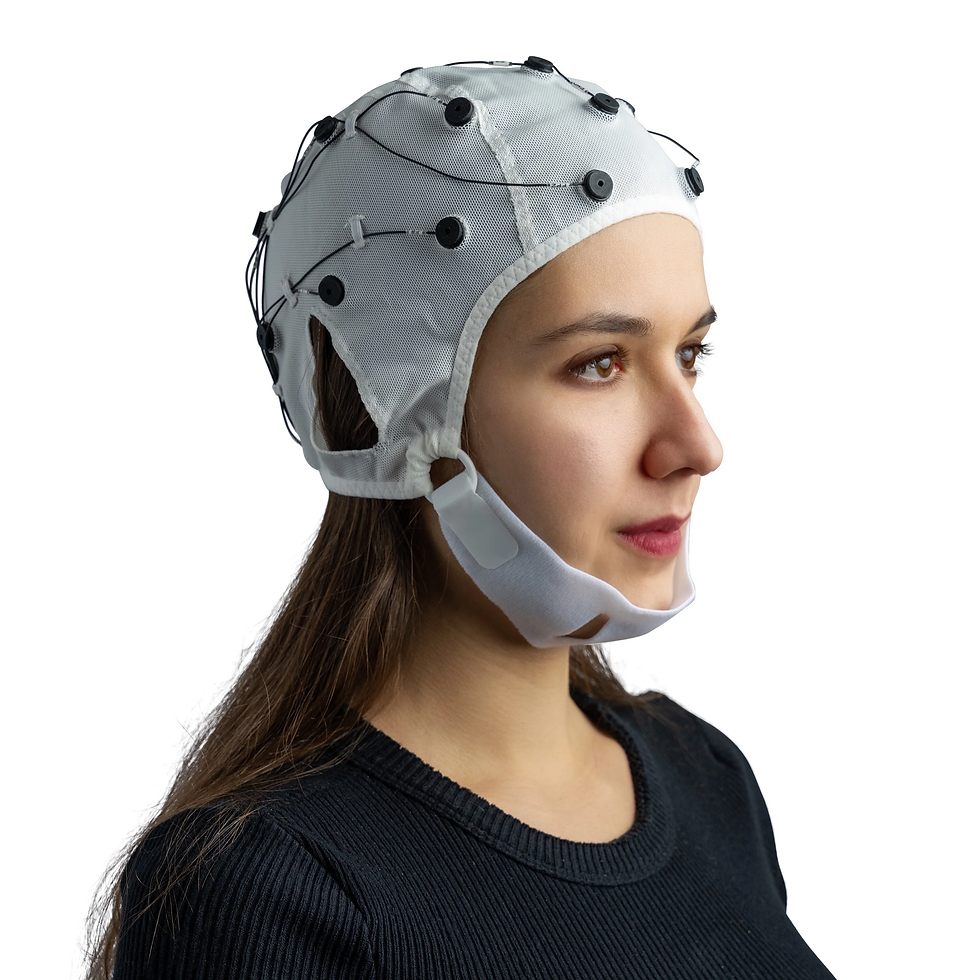
At its core, an EEG machine records the electrical impulses generated by the brain's neurons as they communicate with each other. Electrodes placed strategically on the scalp detect these tiny electrical signals, which are then amplified, filtered, and transformed into a visual representation known as an EEG waveform. By analyzing these waveforms, researchers and medical professionals can gain insights into brain activity, patterns, and connectivity, offering a unique window into the complexities of the mind.
Clinical Applications and Neurological Insights:
EEG machines have proven invaluable in the diagnosis and management of various neurological conditions. They aid in the detection and characterization of epilepsy, helping to identify abnormal electrical activity and pinpoint seizure onset zones. EEGs also assist in diagnosing sleep disorders, such as sleep apnea and insomnia, by assessing sleep architecture and detecting abnormal brainwave patterns. Furthermore, EEG machines play a crucial role in neuroscience research, enabling scientists to study cognitive processes, brain development, and neurological disorders such as Alzheimer's disease and autism.

Decoding EEG Waveforms:
Interpreting EEG waveforms requires a deep understanding of the different types of brainwave patterns and their significance. Alpha waves (8-12 Hz) are associated with relaxation and wakeful relaxation, while beta waves (13-30 Hz) are linked to focused mental activity. Theta waves (4-7 Hz) are observed during deep relaxation or drowsiness, and delta waves (0.5-4 Hz) are associated with deep sleep. Abnormal waveforms, such as spikes and sharp waves, can indicate epileptic activity or other neurological disorders. By decoding these waveforms, researchers and clinicians gain insights into brain function and pathology.
Technological Advances and Practical Considerations:
Advancements in technology have expanded the capabilities of EEG machines, making them more versatile, user-friendly, and portable. Digital EEG systems have replaced outdated analog recordings, providing higher resolution and faster data processing. Wireless and ambulatory EEG devices allow for more natural movement during recordings, enabling long-term monitoring in natural environments. Additionally, the integration of EEG with other neuroimaging modalities, such as functional MRI (fMRI) and magnetoencephalography (MEG), offers a comprehensive understanding of brain activity and connectivity.
Conclusion:
EEG machines continue to shape our understanding of the human brain, unraveling its mysteries and shedding light on neurological conditions and cognitive processes. With their ability to capture and analyze brainwave patterns, these devices play a crucial role in both research and clinical practice. From diagnosing epilepsy to studying brain development and cognitive function, EEG machines have become indispensable tools in neuroscience. As technology advances and our understanding of the brain deepens, EEG machines will continue to push the boundaries of our knowledge, empowering researchers and clinicians to unlock the mind's symphony and pave the way for innovative treatments and interventions.


Comments